Vietnam offers three realistic ways to cover long distances: sleeper bus, train, and domestic flight. Each wins on a different axis, and the right choice usually comes down to your specific route rather than a single “best” answer.
Head-to-Head Comparison
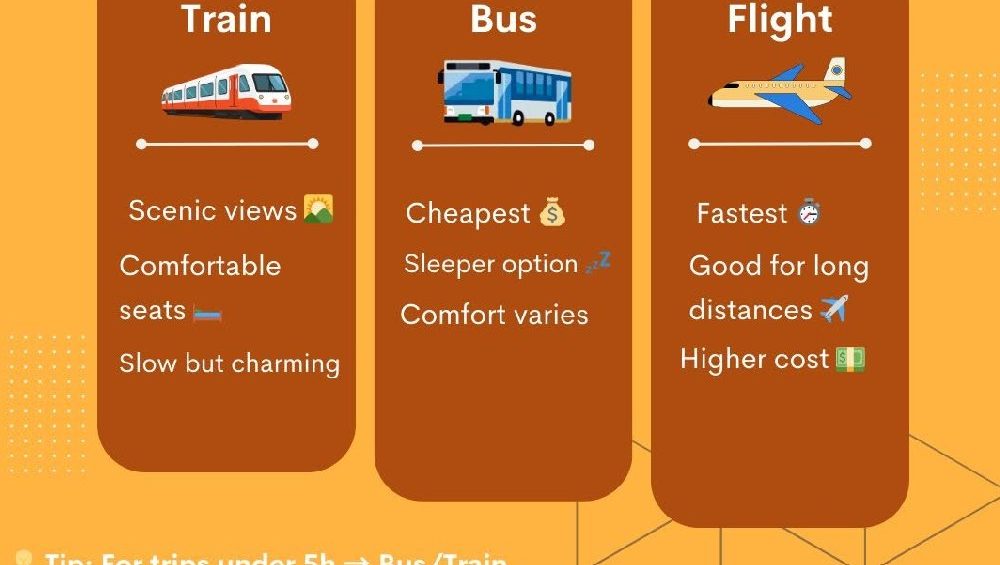
| Sleeper Bus | Train | Flight | |
|---|---|---|---|
| Typical price | $7 – $50 | $15 – $60 | $25 – $100 |
| Route coverage | Nearly everywhere, including remote towns | Fixed rail line (mainly Hanoi–HCMC coastal corridor) | Major cities and tourist hubs only |
| Comfort | Moderate, varies significantly by operator | High — more space, soft sleeper cabins available | High, but shortest total door-to-door time |
| Scenery | Good on daytime departures | Excellent, especially the Hanoi–Hue–Da Nang coastal stretch | None |
| Best for | Budget travel, remote destinations (Ha Giang, Mui Ne, Da Lat, Phu Quoc) | Scenic coastal routes, travelers wanting space to move | Long distances (Hanoi–HCMC) or tight schedules |
When the Sleeper Bus Wins
Anywhere the train doesn’t reach. Destinations like Ha Giang, Mui Ne, Da Lat, and Phu Quoc’s mainland connection have no rail line, making the bus the only overland option. It’s also simply the cheapest choice on nearly every route, and buses run far more frequently than trains — often every 1–2 hours rather than a handful of fixed daily departures.
When the Train Wins
The Reunification Express running along the coast between Hanoi and Ho Chi Minh City is genuinely one of the best train journeys in Southeast Asia, particularly the Hanoi–Hue–Da Nang stretch through the Hai Van Pass. If you have the time and want to actually see the country rather than sleep through it, the train is worth the extra cost and space.
When Flying Wins
For the full Hanoi–Ho Chi Minh City distance (over 1,700 km), flying is almost always the better call — a 2-hour flight versus a 30+ hour bus or train journey. It’s also worth considering on routes like HCMC–Phu Quoc, where flights can be found for $40–$80 against a much longer bus-and-ferry combo.
A Simple Decision Framework
- Route has no train line? → Sleeper bus is your only overland option
- Traveling the coastal Hanoi–HCMC corridor with time to spare? → Train for comfort and scenery
- Covering a long distance on a tight schedule? → Flight, especially if fares are under $80
- Tight budget, flexible schedule, short-to-medium distance? → Sleeper bus wins on price almost every time
Frequently Asked Questions
Is the sleeper bus cheaper than the train in Vietnam?
Generally yes, though the gap narrows on longer routes where soft-sleeper train cabins can cost similarly to a VIP bus cabin.
Which is faster, bus or flight?
Flights are dramatically faster for long distances like Hanoi–HCMC. For shorter regional routes, the time difference (including airport transfers) is often smaller than expected.
Can I take the train to Sapa or Ha Giang?
No — neither destination has direct rail access, making the sleeper bus the standard choice for both.
Ready to book a specific route? See our complete Vietnam sleeper bus guide for prices and operators by destination.