
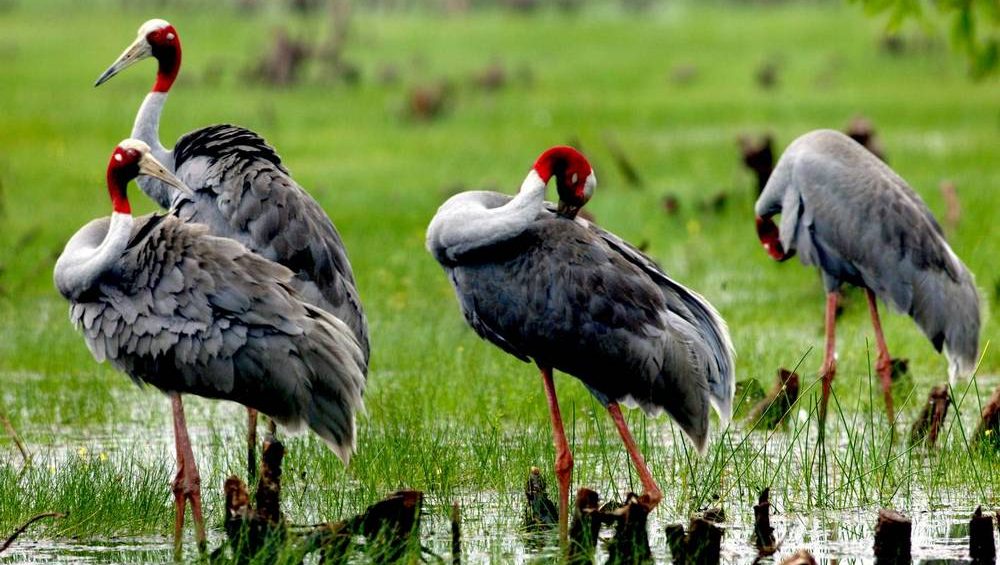
Although the territory lies entirely in the tropics, Vietnam’s climate is distributed into three main types. The diverse topography, long latitude (Vietnam spans over 15° of latitude), and influences from the South China Sea lead to climatic conditions varying significantly between regions. The North having a humid subtropical climate. The North Central, Central and South Central regions have a tropical monsoon climate, the southernmost regions of Central Vietnam and the South have tropical savanna characteristics. In addition, a temperate climate exists in mountainous areas, which are found in Sa Pa and Da Lat, while a more continental climate exists in Lai Châu Province and Sơn La Province.
This climate variation greatly affects the formation of vegetation and ecosystems in different regions of Vietnam. Visit Vietnam, to understand more about this division, you can visit the national parks. Each national park located on different locations will have its distinct ecological characteristics.
STATISTIC
Currently, Vietnam has 34 national parks. National parks in Vietnam spread thoroughly from North to South, borders to remote islands, in order to protect natural ecosystems, flora and fauna, and diverse natural landscapes such as: Subtropical fog forests, alpine subtropical forests, evergreen tropical forests and coastal mangroves, or melaleuca forests on peat.
Here are lists of national parks in 7 topographical climate zones:
- Northern midland and mountainous: Bai Tu Long, Ba Be, Phia Oac – Phia Den, Tam Dao, Xuan Son, Hoang Lien, Du Gia.
- Northern Delta: Cat Ba, Xuan Thuy, Ba Vì, Cuc Phuong.
- North Central: Ben En, Pu Mat, Vu Quang, Phong Nha – Ke Bang, Bach Ma.
- South Central: Song Thanh, Nui Chua, Phuoc Binh.
- Central Highlands: Chu Mom Ray, Kon Ka Kinh, Yok Don, Chu Yang Sin, Bidoup Ba Mountain, Ta Dung.
- Southeast: Cat Tien, Bu Gia Map, Lo Go – Xa Mat, Con Dao.
- Mekong River Delta: Tram Chim, Ca Mau Cape, Upper U Minh, Lower U Minh, Phu Quoc.
CHARACTERISTIC AND CLASSIFICATION
World Natural Heritages:
These are places and areas recognized by UNESCO as of outstanding historical, cultural, scientific and beauty value and are protected by law and international conventions with great significance to humanity.
Presently, Vietnam has two world natural heritages: Phong Nha – Ke Bang National Park and Bai Tu Long in Ha Long Bay. In addition, the national parks in Vietnam that are being considered by UNESCO to become a world natural heritage are Cat Tien and Ba Be National Parks and Con Moong Cave of Cuc Phuong National Park.
ASEAN Heritage Park:
These national parks ensure the criteria of nature, wilderness, ecological integrity, diversity and outstanding population value. The main function is to perform and be responsible for the conservation of rare flora and fauna living in Southeast Asia.
There are 9 national parks acknowledged as ASEAN Heritage Parks: Hoang Lien, Ba Be, Chu Mom Ray, Kon Ka Kinh, Upper U Minh and Bai Tu Long national parks, Bidoup Ba Mountain, Vu Quang and Lo Go – Xa Mat. Vietnam has become the member with the most ASEAN Heritage Parks in the region.
World Biosphere Reserve:
These are nature reserves with unique ecosystems that promote the conservation and development of biodiversity.
Up to the present time, Vietnam has national parks belonging to the World Biosphere Reserves officially recognized by UNESCO, which are:
- Cat Ba National Park is the core area of the Cat Ba Archipelago Biosphere Reserve.
- Xuan Thuy National Park, together with Tien Hai Nature Reserve, is the core area of the Red River Delta Biosphere Reserve.
- Pu Mat National Park, together with Pu Huong and Pu Hoat Nature Reserves, is the core area of the Western Nghe An Biosphere Reserve.
- Cat Tien National Park coincides with the boundary of Cat Tien Biosphere Reserve.
- Ca Mau Cape and Lower U Minh National Parks together with the West Sea coastal protection range are the core areas of the Cape Ca Mau Biosphere Reserve.
- Upper U Minh and Phu Quoc National Parks, together with Kien Luong – Kien Hai Coastal Protection Forest, are the core areas of the Kien Giang Coastal and Sea Biosphere Reserve.
Ramsar Site
Ramsar Sites are wetlands of great significance in the world. These Nature Reserves aim to utilize wetlands for sustainable use of resources.
National Parks in Vietnam are recognized as Ramsar sites, including: Xuan Thuy National Park, Cat Tien National Park, Ba Be National Park, Tram Chim National Park, Ca Mau Cape National Park, Con Dao, Lang Sen, Upper U Minh and Van Long national parks.
MUST-VISIT NATIONAL PARKS
1. Phong Nha – Ke Bang National Park
Phong Nha – Ke Bang National Park in Quang Binh Province has been twice honored by UNESCO as a World Natural Heritage Site and is also the only national park in Vietnam that is currently recognized by UNESCO. Phong Nha Ke Bang National Park is also the largest national park in Vietnam with some of the largest caves in the world.
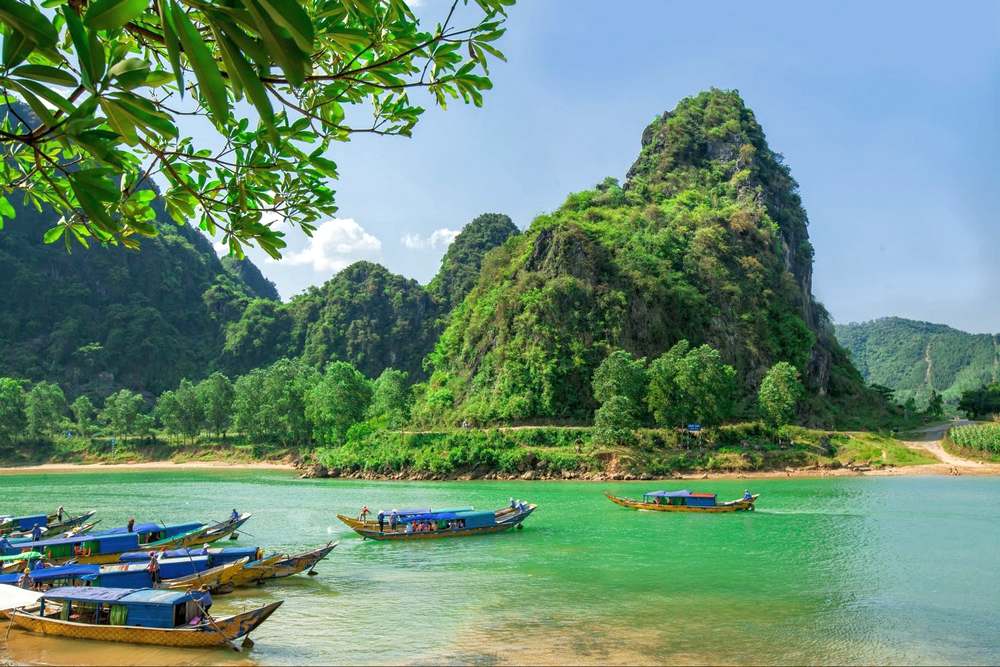
Phong Nha – Ke Bang National Park has a relatively intact, humid tropical forest on limestone mountains. With a coverage of 94%, of which 84% is primeval forest, the park has a wide variety of flora and fauna, many of which are listed in the Red Book of the World Conservation Union (IUCN), and exist only in a few places in the world.
This will be an ideal place for those who love to explore and adventure. Phong Nha – Ke Bang area has a population of more than 300 magnificent caves with diverse size and variety and is known as the “Kingdom of Caves” – where there are many hidden interesting things. This place is considered a paradise for cave scientists, adventurers and tourists.
2. Phu Quoc National Park
Phu Quoc National Park is located in the northeast of Phu Quoc Island, about 13 kilometers from the center of Phu Quoc city.
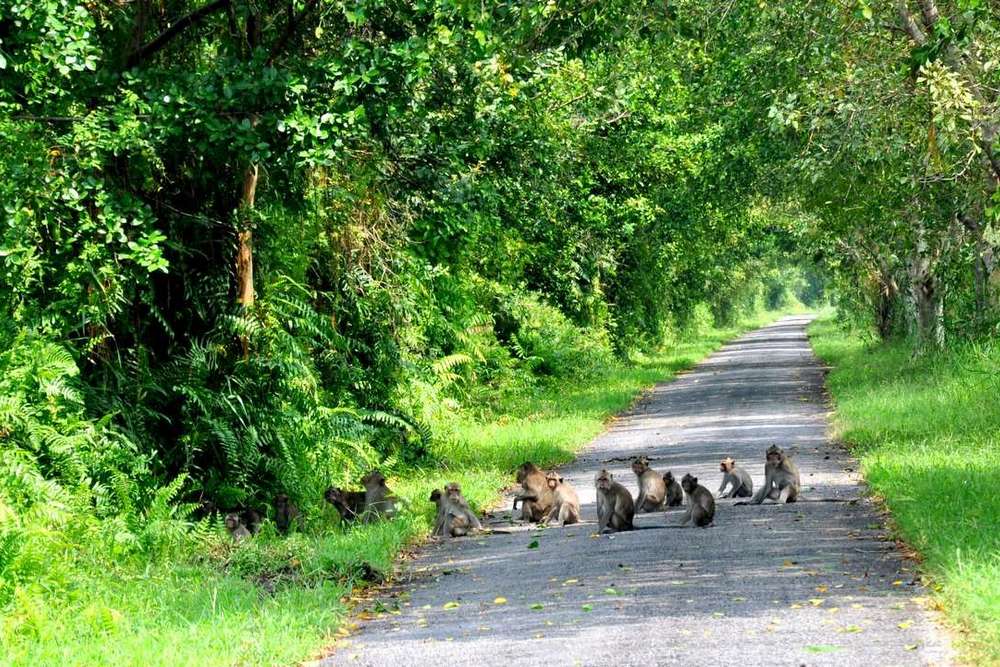
Phu Quoc National Park is a convergence of forests, seas, streams, waterfalls, and hills. Primeval vegetation and tropical forests are home to about hundreds of species of birds and mammals, some of which are rare and at high risk of extinction. Besides rich flora and fauna, Phu Quoc National Park also owns about 60 kilometers of coastline with beautiful views, where people find beautiful coral reefs and unique sea creatures.
With such an abundant forest and marine ecosystem, Phu Quoc National Park has become one of the biodiversity centers of Vietnam, not only attracting tourists, but also a place for scientific research. Going deep into the primeval forest, you will immediately feel the cool steam emanating from the nearby streams. When coming here, you can also try trekking to the top of Chua mountain, which is said to be the “roof of Phu Quoc” with an altitude of 603 meters in the Ham Ninh range.
3. Cuc Phuong National Park
This is considered one of the most famous national forests of Vietnam, and is a destination for youngsters, especially every summer vacation. Cuc Phuong National Park is also the first nature reserve in Vietnam with the diversity of species in the forest ecosystem, creating a very attractive landscape and natural scenery.
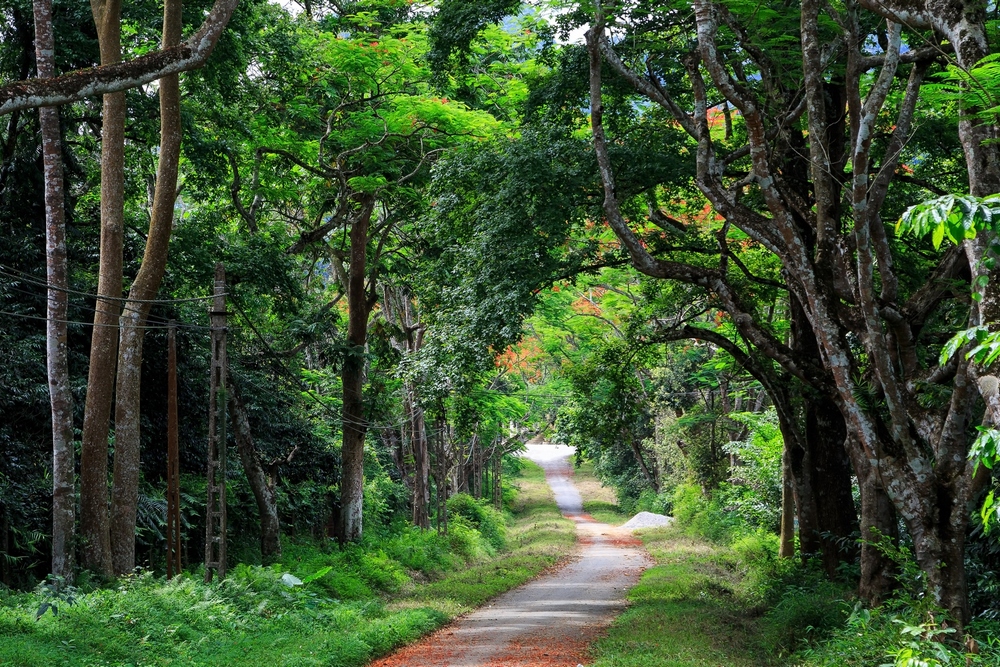
Cuc Phuong National Park covers an area of 25,000 hectare and is also the first national forest of Vietnam. The characteristic of Cuc Phuong is tropical evergreen rainforest with extremely rich and diverse flora and fauna. There are many endangered species of flora and fauna that have been discovered and preserved here, of which the outstanding black-and-white angur is considered the symbol of Cuc Phuong forest.
Especially, coming to Cuc Phuong National Park in May is the time when butterflies in Cuc Phuong forest are at their most splendid. With the number of individuals that can be up to millions, they are racing to show off the sky, making this place like a beautiful “butterfly forest” like in a fairyland. Belonging to half-covered Caste terrain, Cuc Phuong has many beautiful caves with tempting names such as Son Cung cave, Pho Ma Giang cave, etc. visitors can come to admire them.
4. Yok Don National Park
Yok Don National Park has the most diverse flora and fauna in the country, that’s why this national park is classified as A in protected areas of international importance. Yok Don National Park is the only national park in Vietnam that preserves the dipterocarp forest. A typical type of forest with trees belonging to the broadleaf family, which is of great value to ecology, science, tourism, etc.
It is estimated that 90% of the area of this national park is primeval forest, including 3 main zones: special protection area, restoration area and administrative service area. Most tourists can only explore the inside of the administrative service area with an area of nearly 5 hectares. Yok Don National Park is a common home, inhabited by many species of flora and fauna. There are also rare and precious animals preserved in the Red Book such as elephants, bears, star deer, chamois, pheasants, twisted horned bulls, peacocks, starlings, phoenixes… in which there are also 23 species of extremely precious orchids. rare. Some typical strange plants such as: Dipterocarpus tuberculatus Roxb, Dipterocarpus obtusifolius, Dipterocarpus gracilis…
Coming to Yok Don, tourists can experience activities of riding elephants, cycling under the canopy of the dipterocarp forest, sitting in a canoe, motorboat on the river, or hiking, climbing, bathing in Dak Lau stream, Dak Te, Dak Ken, visit Seven Branches Waterfall, Buddha Waterfall… If you want to see a panoramic view of the dipterocarp forest, you should conquer Yok Don peak – the highest mountain chosen to name the Park.
5. Chua Mountain National Park
Chua Mountain National Park, located in Ninh Thuan province, is a place where climate, soil and topographic conditions converge to form a typical arid ecosystem not only in Vietnam but also in the Southeast Asian. In addition to the semi-arid ecosystem, Chua Mountain National Park also has other types of ecosystems such as evergreen forest ecosystems, grassland ecosystems.
This place possesses many values of forest and marine biodiversity with rare animals and plants, natural landscapes, and unique features of the dry coastal climate of Ninh Thuan. Chua Mountain National Park is located on a mountain complex encroaching on the windy coast, here you will admire a lot of creatures that are rich and diverse in number and types.
In this peaceful space, visitors can freely walk on the white sand beaches, swim in the sea or relax by fishing. For the adventurous, it is possible to climb the precarious cliffs on the coast or explore the beautiful natural caves. Visitors can also meet and learn about the life and fishing of the fishing village people… If you have time to stay overnight at Nui Chua, don’t miss the opportunity to watch sea turtles lay eggs. If you choose the right place and the right time, you can witness it with your own eyes.
6. Cat Tien National Park
Cat Tien National Park is one of six biosphere reserves recognized by UNESCO in Vietnam. About 160 kilometers from Ho Chi Minh City and surrounded by three provinces of Dong Nai, Lam Dong and Binh Phuoc, Cat Tien National Park is an area where many rare and precious animals and plants are preserved. The site is an important area to maintain the broadleaf evergreen forest ecosystem, along with many diverse ecosystems: moist evergreen forests, grasslands and wetlands. The natural terrain interspersed with lakes, lagoons, streams, adding in more than 90kilometers of Dong Nai river have created a typical landscape for Cat Tien park, with rapids, waterfalls, wetlands and semi-submerged areas…
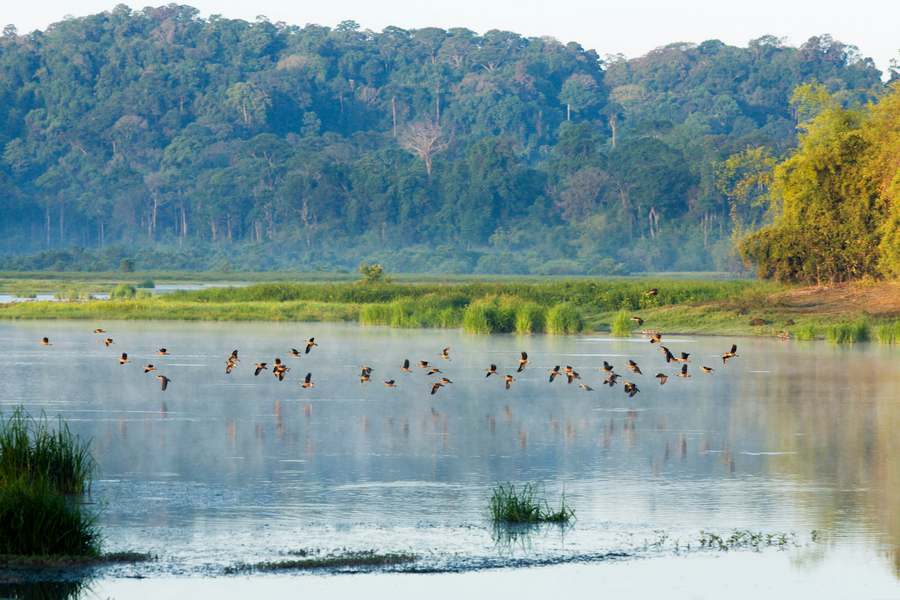
Considered as a secluded paradise, Nam Cat Tien National Park possesses many precious ancient roots, fresh plants that are just right to soothe the summer heat. Visiting Cat Tien National Park, visitors can weave on the trail through the primeval forest to see firsthand strange species of fungus, branches of wild flowers with attractive scents, hundreds of medicinal plants, precious orchids… In addition, you can participate in interesting activities such as: cycling through the most beautiful forest in Vietnam, bathing in rivers and streams, camping overnight in Bau Sau,… Or relaxing with sports activities such as trekking, kayaking, mountain climbing, learning about the life of the Ma – Stieng ethnic group…
Nam Cat Tien National Forest is one of the tourist destinations in Vietnam that gives you the most “primitive” and pure feeling.
7. Bach Ma National Park
Bach Ma National Park is part of the Northern Truong Son Range, with many mountain ranges with peaks above 1,000m running horizontally from West to East located in Phu Loc district, Thua Thien Hue province, 40 kilometers from Hue city. Bach Ma is home to many rare and precious animals and plants of the tropics in the vast primeval forest with spectacular streams and waterfalls. For those who love unspoiled beauty, fresh air, and tranquility, this will be the ideal place for you.
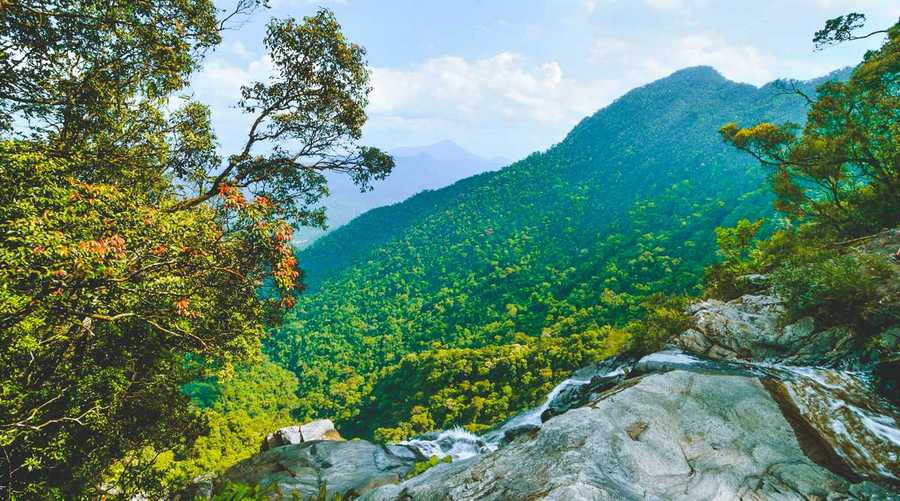
This place still retains the wild features of a primeval forest and preserves a diverse ecosystem. Coming to Bach Ma, you will enjoy the beauty of diverse nature with many exotic flowers, majestic and poetic landscapes with many high mountains, large waterfalls and cool, clear lakes. At the foot of the mountain ranges are narrow, long valleys with blue streams creating a unique beauty that attracts tourists.
When visiting Bach Ma National Park, you can go camping, bathing in streams, bird watching, walking, burning incense to pray to Buddha or watching the mysterious beauty of ancient villas. Furthermore, you will enjoy aerial entertainment and explore many magical nature trails, such as the Star Pheasant trail leading to Star Pheasant waterfall – where many star pheasants live; Do Quyen trail leads to Do Quyen waterfall; Five Tiger trail leads to 5 consecutive lakes formed from a large stream; Vong Hai Dai trail leads to the viewing platform on the top of Bach Ma. Standing from here, visitors can enjoy the panoramic view of Hai Van Pass, Chan May Bay close to the East Sea coast…
8. Cat Ba National Park
Cat Ba National Park in Cat Hai district, Hai Phong province, is one of the most renowned tourist attractions to experience nature in Hai Phong recently. Cat Ba National Park is an attractive eco-tourism destination and is especially charming to visitors who love adventure. With majestic natural landscapes, overlapping mountains and diverse forest ecosystems, this place is recognized by UNESCO as a world biosphere reserve.
This place is a combination of many ecosystems including evergreen forest on limestone mountains, high mountain wetland forest, coastal sesame mangrove forest, waters with near-shore coral reefs, cave systems, valleys and residences. This is one of the largest special-purpose forests of Vietnam, where the world’s biosphere is stored. The National Park has a rich and unique biological population. Currently, in Cat Ba National Park, many marine ecosystems, terrestrial forests, submerged forests, and rare species of flora and fauna are preserved. In particular, Cat Ba National Park is the only place that still has a population of white-headed langurs, which are rare primates, listed in the Vietnam Red Book and the Red List of the International Union for Conservation of Nature (IUCN) for being the most endangered species in the world.
Traveling to Cat Ba National Park, you will have the opportunity to participate in picnic activities, explore interesting nature such as: fishing, enjoying the cool water at the beach, going to see animals at night, watching birds in the morning… One of the thrilling activities chosen by many tourists to discover the beauty of Cat Ba National Park is Trekking through the vast forests. It can be said that this activity attracts most tourists when coming here.
9. Ba Be National Park
Ba Be National Park is located in Ba Be district, Bac Kan province. This national park is 50 kilometers from Bac Kan town and 250 kilometers from Hanoi to the North. This place is an ideal eco-tourism destination with interesting landscapes and biodiversity.

Ba Be National Park is a biodiversity area with typical features of an evergreen forest ecosystem on limestone mountains. To sum it up in one phrase is “extremely beautiful”. With more than 1000 species of plants, of which about 80 species of rare animals are always preserved and nurtured. It can be said that Ba Be National Park is one of the rare ecosystems that still preserve what nature has given. Ba Be Lake – is considered as the “Emerald” of Ba Be National Park, and a perfect eco-tourism destination for tourists. It is the wild, poetic beauty and natural biodiversity of the garden that has attracted many tourists everywhere.
Ba Be National Park is known as a famous landscape of the world. This is the place for you to discover the magnificent cave system as well as the flora and fauna. The first activity you must try when visiting Ba Be National Park is to rent a boat to explore the beauty of this place to admire the natural beauty of the mountains and forests of Bac Kan. What’s more, Ba Be National Park also owns extremely special stalactite caves, which are artistic masterpieces that nature has bestowed on this beautiful land. The caves are often visited by many tourists such as: Puong cave, Three Gates cave, Na Phong cave and Hua Ma cave.